
Storm Damage Repair in Plano
If you’re like most Plano homeowners, you’re about to learn a hard truth about how the storm damage repair industry works. The roofer who replaces your shingles won’t fix your ceiling. The remodeling company that repairs your drywall won’t touch your roof and somewhere in between, you’ll spend weeks on the phone trying to figure out who’s responsible for what.
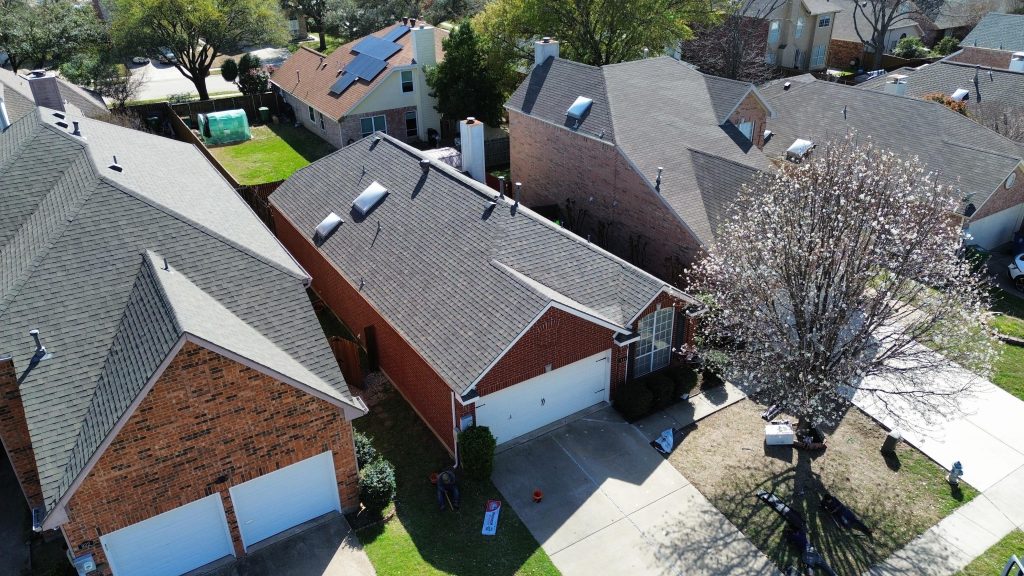
Storm damage repair in Plano is about understanding how water moves through your home and having one contractor who follows it all the way.
Why Plano Homes Are Vulnerable to Storm Damage
Plano’s housing stock tells a story, neighborhoods like Kings Ridge and Chase Oaks boomed in the early 2000s. Willow Bend and Lakeside on Preston followed soon after, these homes are now reaching an age where roofing systems naturally begin to show wear just as they’ve weathered two decades of North Texas storms.
The Impact of North Texas Hail
Hail is the primary culprit in most Plano storm damage claims. When hailstones strike asphalt shingles, they don’t always create visible cracks. Instead, they bruise the shingle, compressing the internal layers and knocking loose the protective granules that shield your roof from UV rays.
That bruise weakens the shingle. Over time, it becomes a crack. And eventually, water finds its way through.
What to watch for:
- Dark spots on shingles where granules are missing
- Dents on gutters, vents, and flashing
- Bruised shingles that feel soft when touched
- Granules collecting in downspouts
Wind Damage Patterns in Collin County
Wind damage is harder to spot from the ground. Strong gusts lift shingles just enough to break the seal that holds them down, from the street, everything looks fine but up close, those shingles no longer provide watertight protection.
Signs of wind damage:
- Shingles that appear lifted or curled
- Missing shingles after storms
- Loose flashing around chimneys and vents
- Debris in the yard after high winds
The Problem That Doesn’t Show Up Right Away
Here’s what makes storm damage repair in Plano so challenging: the damage you can see is rarely the whole story.
Water is patient, it finds the smallest opening and follows the path of least resistance. A lifted shingle near your ridge vent might let in water that runs down the roof deck, soaks into insulation, and finally appears as a stain on your first-floor ceiling twenty feet away from where the actual damage occurred.
This is why so many Plano homeowners discover interior damage weeks or months after a storm. By the time they see evidence inside their home, the water has been working through their structure for days or weeks.
The Insurance Claim Process in Plano
Navigating a storm damage insurance claim can feel overwhelming. Here’s what Plano homeowners need to know.
What Adjusters Look For
When your insurance adjuster inspects your property, they’re looking for:
- Proof of storm occurrence (date, type of storm, affected area)
- Visible damage to roofing materials
- Granule loss that compromises shingle integrity
- Impact marks from hail
- Wind lifts that broke shingle seals
- Interior damage directly linked to the storm
The challenge? Adjusters inspect hundreds of homes after major storms, they move quickly and if you don’t have someone advocating for you, damage can be missed or undervalued.
How to Document Damage Properly
The difference between a fully covered claim and one that falls short often comes down to documentation. Here’s a step-by-step approach that protects your interests.
Start by scheduling a professional inspection before your adjuster arrives. An independent contractor can identify damage you might miss and create their own documentation. This gives you a second set of eyes and a baseline to compare against the adjuster’s findings.
Once the inspection is complete, make sure your contractor documents everything thoroughly. This means high-resolution photos from multiple angles, detailed notes about what they found, and precise measurements of affected areas. Good documentation tells a story that adjusters can follow.
When the adjuster arrives, be present for the inspection if at all possible. You don’t need to be an expert—you just need to be there. Listen to what they say, ask questions when something isn’t clear, and ensure they see the same things your contractor documented. Your presence signals that you’re paying attention.
After the adjuster’s visit, take time to compare their report with your contractor’s findings. Look for discrepancies. Did they note the same damage? Were any areas missed? This comparison often reveals where claims get undervalued.
Proper documentation isn’t complicated, It just requires attention to detail and a contractor who understands what matters to insurance companies.